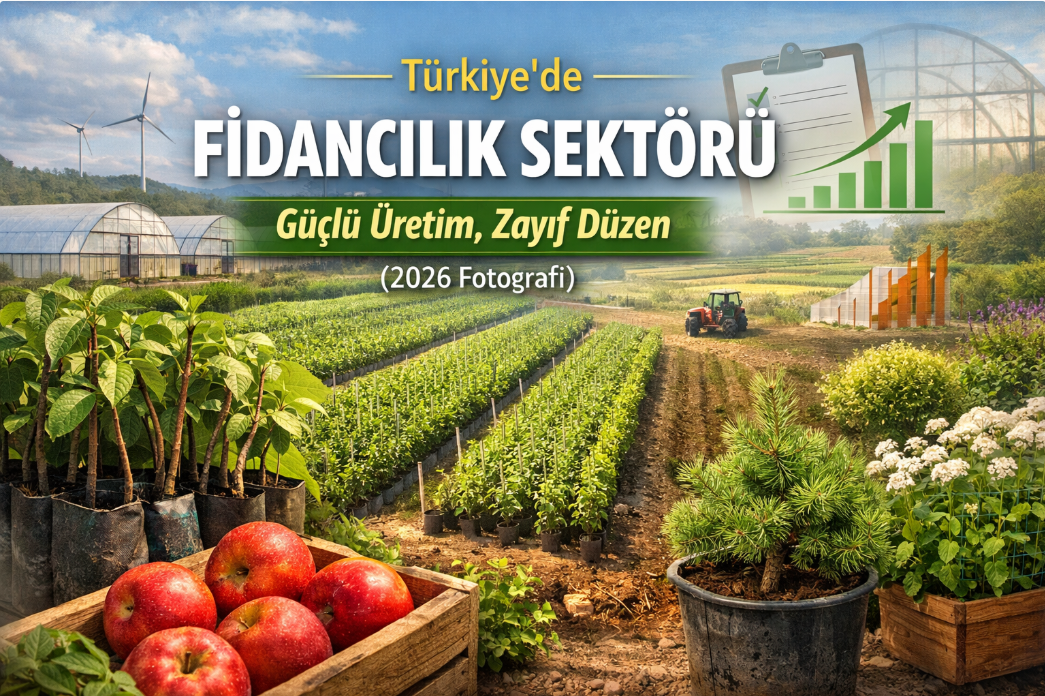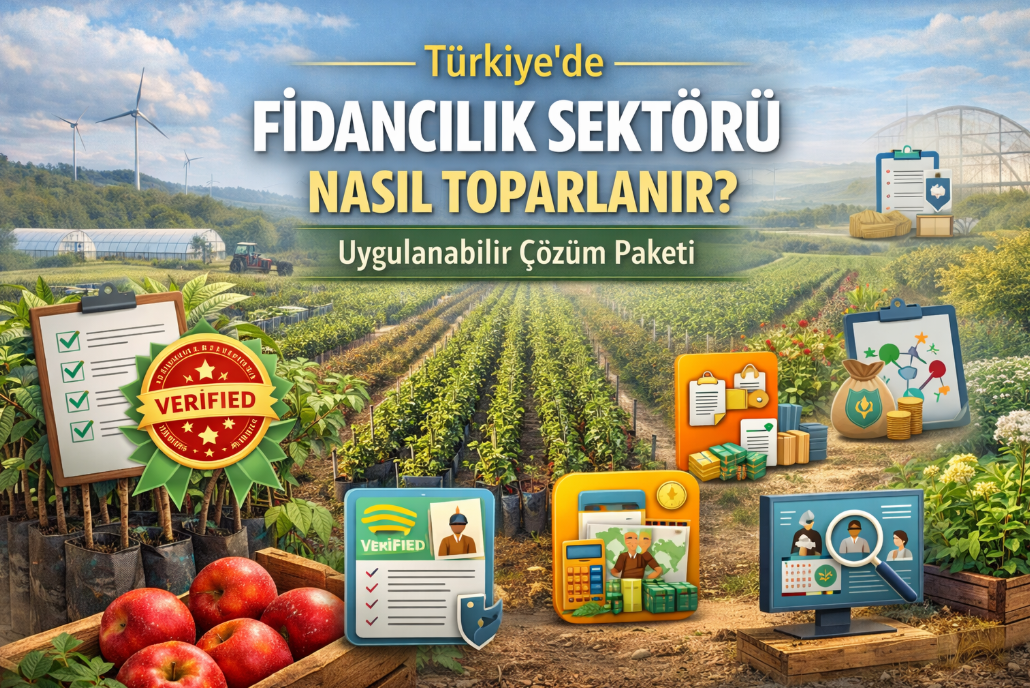
In the previous article, we took a snapshot of the situation: Türkiye has real production capacity in nurseries, but the sector’s order-and-trust infrastructure is weak. So the solution is not “let’s produce more.” The solution is to make the same production safer, more traceable, more planned, and more profitable.
In this part, I’ll describe a recovery package that actually works on the ground. There will be technical terms—but I’ll put the plain-English meaning right next to them so everyone can follow.
1) Trust first: No order without a “Sapling Product Card”
Do you know where the biggest fights in the sector start?
-
“Is this really that variety?”
-
“Is the rootstock correct?”
-
“Is the age/height you claim accurate?”
-
“Is the delivered product the same as the photo?”
So the issue is not price. It’s information pollution.
Solution: For every sapling—more precisely, for every batch/lot—a standardized information card must be mandatory. Let’s call it a Sapling Product Card. Whether someone posts a listing, makes an offer, or negotiates by phone, everyone should speak the same language.
This card must clearly include:
-
Species / variety (e.g., “Gala apple”)
-
Rootstock (critical in fruit trees and grapes; e.g., “MM106,” “M9”)
-
Age / grade / height–caliper range (a range, not a single number)
-
Root type (bare-root / plug / potted)
-
Production location (province/district) + producer identity
-
Batch/lot number (traceability: “let’s find this lot”)
-
Current photo + photo date (old photos = deception)
-
Certification/label info (if available)
What happens if this card doesn’t exist?
The market runs on “verbal culture,” everyone suspects everyone, and even the honest operators get swallowed because “people assume everyone is the same.”
2) Verification: Not “Do you have documents?” but a “Trust Score”
On the ground, there are two kinds of producers:
-
Those who work properly—registered, inspected, operating to standards
-
Those operating off-record or loosely—looking “cheap” while damaging trust
Bad news: Today, in many places, both sit on the same shelf.
Good news: This can be fixed.
Here’s the key idea:
Verification (being “verified”) is not decoration—it’s the foundation of market order.
What I mean by verification:
-
Confirming the producer’s identity, facility, and declared documents
-
Enforcing the Sapling Product Card discipline
-
Transparent delivery/complaint/resolution history
What do you gain from this system?
-
Buyers know who they’re buying from
-
Producers stand out through quality
-
Off-record actors find it harder to break the market with “cheapness”
-
And most importantly: Trust turns into price.
Good producers can finally earn the price band they deserve.
3) Regional specialization + logistics partnerships: half the sapling is lost on the road
Many people think nursery business is “pull from the field, sell it.” It isn’t.
The invisible enemy of the sapling trade is logistics.
A good sapling can die in a bad shipment:
roots dry out, break, get crushed, get mixed; labels slip; varieties get scrambled.
The solution has two layers:
A) Packaging standard
Simple rules:
-
A method that preserves root moisture (especially for bare-root)
-
Proper fixing/immobilization to prevent breakage
-
Labels tied so they cannot fall off
-
Box/sack order + batch/lot number discipline
B) Regional “collection-and-distribution” logic
Instead of sending one-by-one cargo, create shared exit points for producers in the same region:
-
Consolidated shipments on the same vehicle
-
Lower cost
-
Less damage
-
Small producers can sell nationwide
This grows small producers—because many can’t scale today for one reason:
“My product is good, but I can’t ship it properly.”
4) Finance and risk management: stock, returns, warranty, contracts
Nursery trade is seasonal.
Buyers often decide at the last minute.
Who carries the risk? The producer.
If this risk isn’t managed, two things happen:
-
Producers cut quality because they fear being stuck with stock
-
Buyers don’t expand the market because they fear “what if it’s wrong?”
Solution: Rules from the start.
Ruleless trade produces conflict.
Cornerstones:
-
Contract: which product, which quality range, which delivery date
-
Deposit/advance payment: so the producer can plan
-
Delivery report: photo + inspection at the moment it arrives
-
Warranty/objection rule: “who is right under which condition?” defined upfront
When I say “warranty,” I mean this:
If the variety/rootstock is wrong, labels are mixed, or the product doesn’t match the description—there must be a clear procedure. Everything shouldn’t turn into a phone argument.
5) On the digital side: not a “marketplace”—a directory + verification + demand collection
There’s a common misunderstanding:
People think “if we build a website, everything will sell.” It won’t.
In nurseries, the real needs are:
-
Who produces what, where? (directory / guide)
-
Is this producer reliable? (verification)
-
I need X product in Y quantity—who can quote? (demand collection)
When I say “lead,” I mean this in plain Turkish/English:
Demand / buyer request / request for quotation—getting the right buyer request to the right producer.
And “RFQ” means:
Request For Quotation form.
The buyer says “I want this product in this quantity,” and producers submit offers.
This is not “add to cart” stock e-commerce.
It’s closer to structured quote collection—not an auction, not a public tender, but realistic offer gathering.
Why is this model right?
-
No nursery can stock every product at all times
-
The product is seasonal and alive
-
Price depends on quality, age, rootstock, region, and delivery timing
-
“Cart” logic is fake; “offer” logic is real
Also, micro-demand (someone who wants 3 saplings) and large demand (someone who wants 5,000) should not go through the same channel.
Micro-demand should be routed to retail; large demand should trigger RFQs to verified producers. That prevents producer fatigue and protects market order.
Conclusion: the sector’s problem is not production—it’s trust
This sector’s problem isn’t “production.” It’s trust. Without trust infrastructure, prices drop, quality drops, and the market shrinks. Our job is to reverse that: set standards, verify, measure, and bind trade to contracts.
In this part, we set the framework. Next, we’ll convert it from talk into field rules. In the remaining parts of the series, I’ll open each heading as its own chapter—with sample templates and checklists:
Part 3 — Minimum Standard Set (Quality & Traceability):
Sapling Product Card template, mandatory fields, photo standards, batch/lot number logic, and how to prevent “missing information” in listings and offers.
Part 4 — Turning Verification/Certification into a Price Advantage:
What “verified producer” means, how verification works, required documents, and how verification translates into visibility and better price bands.
Part 5 — Regional Specialization and Logistics Partnerships:
Packaging standard, shared exit point model, consolidated shipping, damage reduction, and enabling small producers to sell nationwide.
Part 6 — Finance and Risk Management (Stock, Returns, Warranty, Insurance, Contracts):
Deposit/advance rules, delivery reports, objection windows, variety/rootstock mismatch protocol, quality bands, seasonal contracts.
Part 7 — Digital Architecture: Not a “Marketplace,” but Directory + Verification + Demand Collection:
Who-produces-what-where directory, verification badge, RFQ logic in plain terms, and separation of micro-demand/retail routing vs. large-demand/quote collection.
Next part, we place the first stone: the Minimum Standard Set.
Stay tuned—fidanligi is starting.