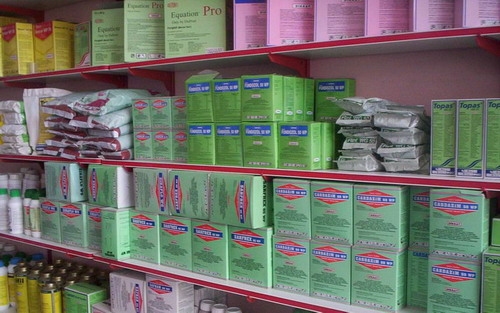
Integrated pest management (IPM) does not mean that pesticides will never be used. If adequate results can be achieved through other control methods, chemical control is not necessary. Pesticide use should be considered a last resort. When pesticide use becomes unavoidable, it is essential to use the appropriate pesticide, at the right time, at the correct dose, and with the proper method.
For this reason, the following points should be considered in pesticide selection and application:
- Use specific/selective pesticides whenever possible.
- Do not exceed the recommended dose.
- Apply the lowest effective dose.
- Prefer pesticides with a short residual (persistence) period.
- Apply treatments at times and in ways that minimize impacts on natural enemy populations.
- Prefer products that are non-toxic or least harmful to beneficial organisms.
- Spray based on the economic injury level (economic threshold).
- When possible, use spot/partial treatments in areas with high pest density.
- Spray at the right time and with an appropriate technique.
It is reported that only about 1% of applied insecticides reach the target pest. Therefore, the remaining portion affects non-target species in the environment and can lead to residues in soil, water, and harvested products. As a result, natural balance is disrupted and various side effects can occur in humans.
If pesticides are to be used within IPM, pesticide selection is critically important. For this reason, countries take certain measures—based on legal and scientific principles—to determine which pesticides can be used in IPM programs.
Many countries have felt the need for non-toxic or low-toxicity products. Therefore, they encourage the use of pesticides suitable for IPM programs. For this purpose, some countries have introduced facilitation in the registration of biopesticides. In other countries, the use of hazardous pesticides has been abolished or restricted.
In some cases, if sufficient results can be achieved through alternative methods to chemical control, the registrations of pesticides used for that purpose are cancelled. In some countries, lower registration fees are applied to promote pesticides without side effects. In addition, some countries work on determining the lowest effective dose and developing biopesticides to reduce risks.
In certain countries, pesticides are classified into two groups for IPM: recommended and not recommended. For visibility, pesticides used in IPM are marked with a yellow band.
Environmentally friendly products should be included in IPM programs. It is also notable that efforts in this field are increasingly intensifying in our country.
In IPM programs, both spray timing and application method are highly important. For example, in aerial spraying, only a small portion of the pesticide reaches the target, while a significant amount reaches non-target areas. As a result, beneficial insects and non-target organisms are harmed.
Damage to beneficial insects disrupts biological balance in favor of pests, and pests that were previously unimportant may become potential pests. In monoculture areas, natural balance is extremely sensitive; when external intervention is made to the ecosystem, both pests and beneficials can die. Since pests recover faster than beneficials, the damage level increases rapidly.
Similarly, in broad-leaved crops such as cotton, pesticides applied from the air remain largely on the leaf surface and cannot reach the underside.
Prof. Dr. Erol YILDIRIM
This article was published in the “Prof. Dr. Erol YILDIRIM” category.
Leave a Reply