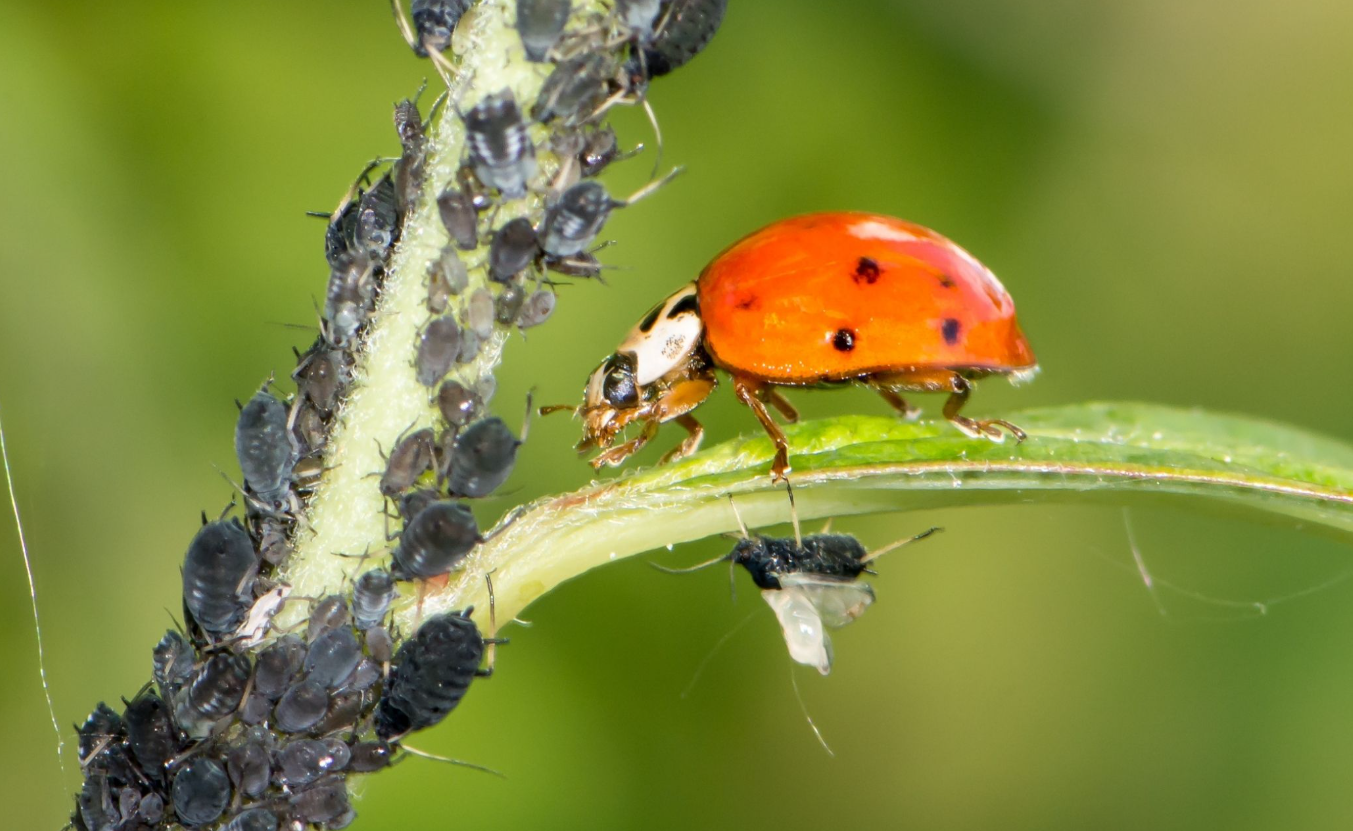
A USDA-ARS study shows emerald ash borer larvae develop poorly in white fringetree, limiting both the pest’s persistence and parasitoid effectiveness—highlighting why ecological context matters in biological control.
A reminder from ecology: context decides outcomes
As our relationship with nature deepens, ecosystem balances keep reshaping themselves. Global trade and the movement of plant material have turned invasive species into a worldwide risk—often faster than management practices can adapt. One of the most destructive examples in North America is the emerald ash borer (EAB; Agrilus planipennis), a wood-boring beetle that has killed millions of ash trees (Fraxinus spp.). (ars.usda.gov)
Researchers with the USDA Agricultural Research Service (USDA-ARS) have confirmed that EAB has also been active on white fringetree (Chionanthus virginicus), a species commonly used as an ornamental. That observation raised a practical question for biological control: Would the larval parasitoids released against EAB in ash trees also work in this new host? (ars.usda.gov)
From lab to field: study design and core findings
A USDA-ARS team (Heather L. Callahan, Jian J. Duan, Douglas W. Tallamy) compared ash vs. white fringetree under both controlled laboratory conditions and field trials. They measured:
- Larval development rate and survival in each host,
- Whether released larval parasitoids (beneficial wasps that parasitize larvae) could successfully attack EAB in the new host.
1) Development delay
EAB larvae feeding in white fringetree developed markedly more slowly. Over a 14-week lab monitoring period, no larva reached the mature “J-stage,” while larvae in ash did. (OUP Academic)
2) Low survival in the field
In field trials spanning two growing seasons, only one larva in white fringetree reached maturity—suggesting the population cannot sustain itself in that host under typical conditions. (OUP Academic)
3) No measurable parasitoid impact in the new host
Parasitism was not observed in white fringetree. A likely explanation is brutally simple ecology: larvae may die or remain too slow-developing to reach the “right” stage for parasitoids to exploit. (OUP Academic)
Overall message: EAB does not appear to establish a persistent population in white fringetree, and biological control efforts should remain primarily focused on ash hosts. (OUP Academic)
The fragile nature of biological control
At first glance, “poor development in the new host” sounds like good news—and it is, in one narrow sense. But the deeper lesson is more interesting (and more useful): biological control is sensitive to timing, host quality, and life-cycle fit.
Parasitoids are not a generic “solution spray.” Their success depends on larvae reaching a specific age and tissue condition. If the host plant forces larvae into slow growth or early death, the parasitoid is effectively firing at a target that never appears.
Biological control is not a medicine—it’s ecological compatibility engineering:
- Host plant anatomy and chemistry,
- Pest feeding physiology and development,
- Parasitoid host-finding behavior and egg-laying dynamics,
- Local temperature, humidity, and photoperiod shaping the entire equation.
Change the host, and the equation changes.
What this means for Türkiye: region × host × climate
Türkiye spans multiple climate regimes—Mediterranean, continental, and Black Sea—so the same pest can express different phenology (seasonal timing) across regions. That makes biological control location-dependent by default.
Think of classic examples:
- Olive fruit fly (Bactrocera oleae) peaks within specific temperature windows in the Aegean,
- Tomato leafminer (Tuta absoluta) can surge in distinct waves under greenhouse conditions along the Mediterranean coast,
- Even pine processionary moth (Thaumetopoea pityocampa) experiences different levels of natural-enemy pressure depending on local ecology.
The EAB case reinforces a rule that field reality keeps repeating:
“The same biological agent won’t produce the same outcome everywhere.”
Successful programs must integrate local ecological context, host plant traits, and pest life stage timing—and verify lab conclusions under real microclimates and local plant material.
Practical principles for growers and gardeners
Key takeaways
- Prioritize local species: Local plants tend to be embedded in local natural-enemy networks; imported ornamentals can carry hidden pests.
- Avoid monocultures: Dense single-species plantings are an all-you-can-eat buffet for pests; diversity creates natural pressure.
- Chemicals as a last resort: Plan cultural/mechanical and biological methods first; use selective chemicals only when timing truly matters.
- Track phenology: Even a simple calendar of pest + beneficial life stages dramatically improves intervention success.
- Observe and document: Photograph early warning signs (leaf mines, resin flow, sub-bark galleries) and keep records.
Science-to-practice bridge: don’t copy—localize
This USDA-ARS study (Delaware) indicates that because EAB performs poorly in white fringetree, parasitoid-based biological control is practically ineffective in that host, and management focus should remain on ash trees. (ars.usda.gov)
The broader lesson for Türkiye is clear: the goal is not to copy a solution, but to localize it. If the host plant, climate, or plant material differs, the same parasitoid or release protocol may not behave as expected.
Biological control works best when it’s built like a decision system: local trials, phenology monitoring, microclimate awareness, and adaptive timing.
Conclusion
Sustainable pest management is not simply “chemical-free production.” It’s turning ecological knowledge into field decisions. The EAB case shows that scientific results are context-bound: if you don’t build the right context, the “solution” may not function. For both professional producers and home gardeners, the principle remains: right organism, right time, right host.
Source (for attribution)
Callahan, H. L., Duan, J. J., & Tallamy, D. W. (2025). Larval development and parasitism of emerald ash borer (Agrilus planipennis) in white fringetree (Chionanthus virginicus): Implications for biological control. Environmental Entomology. https://doi.org/10.1093/ee/nvaf077 (ars.usda.gov)
Leave a Reply