Author: admin

  • How Can Türkiye’s Nursery (Sapling) Sector Recover? (A Practical, Implementable Solution Package)

    How Can Türkiye’s Nursery (Sapling) Sector Recover? (A Practical, Implementable Solution Package)

    In the previous article, we took a snapshot of the situation: Türkiye has real production capacity in nurseries, but the sector’s order-and-trust infrastructure is weak. So the solution is not “let’s produce more.” The solution is to make the same production safer, more traceable, more planned, and more profitable.

    In this part, I’ll describe a recovery package that actually works on the ground. There will be technical terms—but I’ll put the plain-English meaning right next to them so everyone can follow.


    1) Trust first: No order without a “Sapling Product Card”

    Do you know where the biggest fights in the sector start?

    • “Is this really that variety?”

    • “Is the rootstock correct?”

    • “Is the age/height you claim accurate?”

    • “Is the delivered product the same as the photo?”

    So the issue is not price. It’s information pollution.

    Solution: For every sapling—more precisely, for every batch/lot—a standardized information card must be mandatory. Let’s call it a Sapling Product Card. Whether someone posts a listing, makes an offer, or negotiates by phone, everyone should speak the same language.

    This card must clearly include:

    • Species / variety (e.g., “Gala apple”)

    • Rootstock (critical in fruit trees and grapes; e.g., “MM106,” “M9”)

    • Age / grade / height–caliper range (a range, not a single number)

    • Root type (bare-root / plug / potted)

    • Production location (province/district) + producer identity

    • Batch/lot number (traceability: “let’s find this lot”)

    • Current photo + photo date (old photos = deception)

    • Certification/label info (if available)

    What happens if this card doesn’t exist?
    The market runs on “verbal culture,” everyone suspects everyone, and even the honest operators get swallowed because “people assume everyone is the same.”


    2) Verification: Not “Do you have documents?” but a “Trust Score”

    On the ground, there are two kinds of producers:

    1. Those who work properly—registered, inspected, operating to standards

    2. Those operating off-record or loosely—looking “cheap” while damaging trust

    Bad news: Today, in many places, both sit on the same shelf.
    Good news: This can be fixed.

    Here’s the key idea:
    Verification (being “verified”) is not decoration—it’s the foundation of market order.

    What I mean by verification:

    • Confirming the producer’s identity, facility, and declared documents

    • Enforcing the Sapling Product Card discipline

    • Transparent delivery/complaint/resolution history

    What do you gain from this system?

    • Buyers know who they’re buying from

    • Producers stand out through quality

    • Off-record actors find it harder to break the market with “cheapness”

    • And most importantly: Trust turns into price.
      Good producers can finally earn the price band they deserve.


    3) Regional specialization + logistics partnerships: half the sapling is lost on the road

    Many people think nursery business is “pull from the field, sell it.” It isn’t.
    The invisible enemy of the sapling trade is logistics.

    A good sapling can die in a bad shipment:
    roots dry out, break, get crushed, get mixed; labels slip; varieties get scrambled.

    The solution has two layers:

    A) Packaging standard

    Simple rules:

    • A method that preserves root moisture (especially for bare-root)

    • Proper fixing/immobilization to prevent breakage

    • Labels tied so they cannot fall off

    • Box/sack order + batch/lot number discipline

    B) Regional “collection-and-distribution” logic

    Instead of sending one-by-one cargo, create shared exit points for producers in the same region:

    • Consolidated shipments on the same vehicle

    • Lower cost

    • Less damage

    • Small producers can sell nationwide

    This grows small producers—because many can’t scale today for one reason:
    “My product is good, but I can’t ship it properly.”


    4) Finance and risk management: stock, returns, warranty, contracts

    Nursery trade is seasonal.
    Buyers often decide at the last minute.
    Who carries the risk? The producer.

    If this risk isn’t managed, two things happen:

    • Producers cut quality because they fear being stuck with stock

    • Buyers don’t expand the market because they fear “what if it’s wrong?”

    Solution: Rules from the start.
    Ruleless trade produces conflict.

    Cornerstones:

    • Contract: which product, which quality range, which delivery date

    • Deposit/advance payment: so the producer can plan

    • Delivery report: photo + inspection at the moment it arrives

    • Warranty/objection rule: “who is right under which condition?” defined upfront

    When I say “warranty,” I mean this:
    If the variety/rootstock is wrong, labels are mixed, or the product doesn’t match the description—there must be a clear procedure. Everything shouldn’t turn into a phone argument.


    5) On the digital side: not a “marketplace”—a directory + verification + demand collection

    There’s a common misunderstanding:
    People think “if we build a website, everything will sell.” It won’t.

    In nurseries, the real needs are:

    • Who produces what, where? (directory / guide)

    • Is this producer reliable? (verification)

    • I need X product in Y quantity—who can quote? (demand collection)

    When I say “lead,” I mean this in plain Turkish/English:
    Demand / buyer request / request for quotation—getting the right buyer request to the right producer.

    And “RFQ” means:
    Request For Quotation form.
    The buyer says “I want this product in this quantity,” and producers submit offers.

    This is not “add to cart” stock e-commerce.
    It’s closer to structured quote collection—not an auction, not a public tender, but realistic offer gathering.

    Why is this model right?

    • No nursery can stock every product at all times

    • The product is seasonal and alive

    • Price depends on quality, age, rootstock, region, and delivery timing

    • “Cart” logic is fake; “offer” logic is real

    Also, micro-demand (someone who wants 3 saplings) and large demand (someone who wants 5,000) should not go through the same channel.
    Micro-demand should be routed to retail; large demand should trigger RFQs to verified producers. That prevents producer fatigue and protects market order.


    Conclusion: the sector’s problem is not production—it’s trust

    This sector’s problem isn’t “production.” It’s trust. Without trust infrastructure, prices drop, quality drops, and the market shrinks. Our job is to reverse that: set standards, verify, measure, and bind trade to contracts.

    In this part, we set the framework. Next, we’ll convert it from talk into field rules. In the remaining parts of the series, I’ll open each heading as its own chapter—with sample templates and checklists:

    Part 3 — Minimum Standard Set (Quality & Traceability):
    Sapling Product Card template, mandatory fields, photo standards, batch/lot number logic, and how to prevent “missing information” in listings and offers.

    Part 4 — Turning Verification/Certification into a Price Advantage:
    What “verified producer” means, how verification works, required documents, and how verification translates into visibility and better price bands.

    Part 5 — Regional Specialization and Logistics Partnerships:
    Packaging standard, shared exit point model, consolidated shipping, damage reduction, and enabling small producers to sell nationwide.

    Part 6 — Finance and Risk Management (Stock, Returns, Warranty, Insurance, Contracts):
    Deposit/advance rules, delivery reports, objection windows, variety/rootstock mismatch protocol, quality bands, seasonal contracts.

    Part 7 — Digital Architecture: Not a “Marketplace,” but Directory + Verification + Demand Collection:
    Who-produces-what-where directory, verification badge, RFQ logic in plain terms, and separation of micro-demand/retail routing vs. large-demand/quote collection.

    Next part, we place the first stone: the Minimum Standard Set.
    Stay tuned—fidanligi is starting.
  • Biological Control Doesn’t Work the Same on Every Plant: What Emerald Ash Borer Teaches Us

    Biological Control Doesn’t Work the Same on Every Plant: What Emerald Ash Borer Teaches Us

    A USDA-ARS study shows emerald ash borer larvae develop poorly in white fringetree, limiting both the pest’s persistence and parasitoid effectiveness—highlighting why ecological context matters in biological control.

    A reminder from ecology: context decides outcomes

    As our relationship with nature deepens, ecosystem balances keep reshaping themselves. Global trade and the movement of plant material have turned invasive species into a worldwide risk—often faster than management practices can adapt. One of the most destructive examples in North America is the emerald ash borer (EAB; Agrilus planipennis), a wood-boring beetle that has killed millions of ash trees (Fraxinus spp.). (ars.usda.gov)

    Researchers with the USDA Agricultural Research Service (USDA-ARS) have confirmed that EAB has also been active on white fringetree (Chionanthus virginicus), a species commonly used as an ornamental. That observation raised a practical question for biological control: Would the larval parasitoids released against EAB in ash trees also work in this new host? (ars.usda.gov)


    From lab to field: study design and core findings

    A USDA-ARS team (Heather L. Callahan, Jian J. Duan, Douglas W. Tallamy) compared ash vs. white fringetree under both controlled laboratory conditions and field trials. They measured:

    • Larval development rate and survival in each host,
    • Whether released larval parasitoids (beneficial wasps that parasitize larvae) could successfully attack EAB in the new host.

    1) Development delay

    EAB larvae feeding in white fringetree developed markedly more slowly. Over a 14-week lab monitoring period, no larva reached the mature “J-stage,” while larvae in ash did. (OUP Academic)

    2) Low survival in the field

    In field trials spanning two growing seasons, only one larva in white fringetree reached maturity—suggesting the population cannot sustain itself in that host under typical conditions. (OUP Academic)

    3) No measurable parasitoid impact in the new host

    Parasitism was not observed in white fringetree. A likely explanation is brutally simple ecology: larvae may die or remain too slow-developing to reach the “right” stage for parasitoids to exploit. (OUP Academic)

    Overall message: EAB does not appear to establish a persistent population in white fringetree, and biological control efforts should remain primarily focused on ash hosts. (OUP Academic)


    The fragile nature of biological control

    At first glance, “poor development in the new host” sounds like good news—and it is, in one narrow sense. But the deeper lesson is more interesting (and more useful): biological control is sensitive to timing, host quality, and life-cycle fit.

    Parasitoids are not a generic “solution spray.” Their success depends on larvae reaching a specific age and tissue condition. If the host plant forces larvae into slow growth or early death, the parasitoid is effectively firing at a target that never appears.

    Biological control is not a medicine—it’s ecological compatibility engineering:

    • Host plant anatomy and chemistry,
    • Pest feeding physiology and development,
    • Parasitoid host-finding behavior and egg-laying dynamics,
    • Local temperature, humidity, and photoperiod shaping the entire equation.

    Change the host, and the equation changes.


    What this means for Türkiye: region × host × climate

    Türkiye spans multiple climate regimes—Mediterranean, continental, and Black Sea—so the same pest can express different phenology (seasonal timing) across regions. That makes biological control location-dependent by default.

    Think of classic examples:

    • Olive fruit fly (Bactrocera oleae) peaks within specific temperature windows in the Aegean,
    • Tomato leafminer (Tuta absoluta) can surge in distinct waves under greenhouse conditions along the Mediterranean coast,
    • Even pine processionary moth (Thaumetopoea pityocampa) experiences different levels of natural-enemy pressure depending on local ecology.

    The EAB case reinforces a rule that field reality keeps repeating:
    “The same biological agent won’t produce the same outcome everywhere.”
    Successful programs must integrate local ecological context, host plant traits, and pest life stage timing—and verify lab conclusions under real microclimates and local plant material.


    Practical principles for growers and gardeners

    Key takeaways

    • Prioritize local species: Local plants tend to be embedded in local natural-enemy networks; imported ornamentals can carry hidden pests.
    • Avoid monocultures: Dense single-species plantings are an all-you-can-eat buffet for pests; diversity creates natural pressure.
    • Chemicals as a last resort: Plan cultural/mechanical and biological methods first; use selective chemicals only when timing truly matters.
    • Track phenology: Even a simple calendar of pest + beneficial life stages dramatically improves intervention success.
    • Observe and document: Photograph early warning signs (leaf mines, resin flow, sub-bark galleries) and keep records.

    Science-to-practice bridge: don’t copy—localize

    This USDA-ARS study (Delaware) indicates that because EAB performs poorly in white fringetree, parasitoid-based biological control is practically ineffective in that host, and management focus should remain on ash trees. (ars.usda.gov)

    The broader lesson for Türkiye is clear: the goal is not to copy a solution, but to localize it. If the host plant, climate, or plant material differs, the same parasitoid or release protocol may not behave as expected.

    Biological control works best when it’s built like a decision system: local trials, phenology monitoring, microclimate awareness, and adaptive timing.


    Conclusion

    Sustainable pest management is not simply “chemical-free production.” It’s turning ecological knowledge into field decisions. The EAB case shows that scientific results are context-bound: if you don’t build the right context, the “solution” may not function. For both professional producers and home gardeners, the principle remains: right organism, right time, right host.


    Source (for attribution)

    Callahan, H. L., Duan, J. J., & Tallamy, D. W. (2025). Larval development and parasitism of emerald ash borer (Agrilus planipennis) in white fringetree (Chionanthus virginicus): Implications for biological control. Environmental Entomology. https://doi.org/10.1093/ee/nvaf077 (ars.usda.gov)

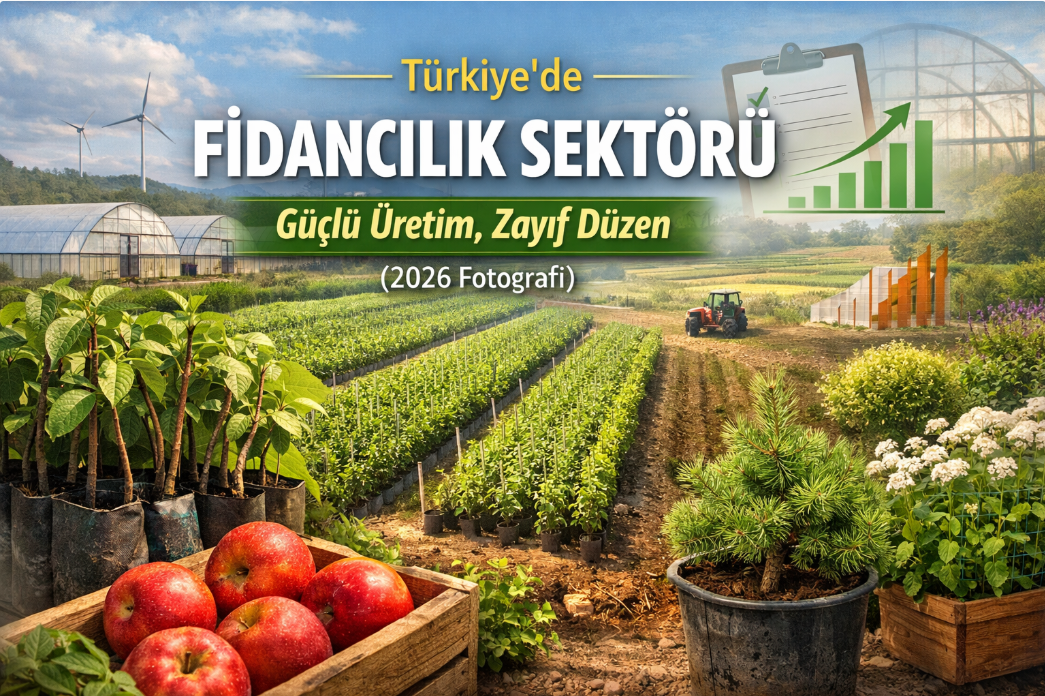
  • Türkiye’s Nursery Industry: Strong Production, Weak Governance (2026 Snapshot)

    Türkiye’s Nursery Industry: Strong Production, Weak Governance (2026 Snapshot)

    Nursery production in Türkiye is often talked about as if it were a single sector, but the on-the-ground reality is this: fruit tree saplings, grapevine plants, strawberry plugs, vegetable seedlings, and ornamental plants may sit under the same umbrella, yet they’re entirely different games. Customer profiles, quality standards, disease risk, logistics, and cash-flow dynamics are not the same. So to understand where the sector stands today, we first need the right snapshot: Türkiye knows how to produce; the real challenge is growing trust, standards, and markets at the same time.

    1) The scale is large — but growth isn’t a straight line

    The scale is clear: seedling/sapling production in Türkiye is massive. Recent data—especially on vegetable seedlings and ornamentals—shows very high unit volumes. The same data set also signals volatility and decline on the fruit sapling side.

    What this tells us: capacity exists, know-how exists, facilities exist. But when demand and risk shift, some sub-sectors can hit the brakes fast. The industry is strong in “production power,” but more fragile in “stability and planning.”

    2) Demand side: climate shock, frost risk, volatility

    In nurseries, demand is primarily driven by orchard establishment/renewal decisions. Those decisions are now being made more cautiously because of climate risk. In recent years in particular, events like frost and drought have directly influenced the farmer’s question: “Should I establish an orchard this year?”

    Result: for a nursery, the biggest problem isn’t “producing”—it’s directing the right product to the right channel at the right time. When demand is strong one year and weak the next, inventory risk and financing pressure surge.

    3) Quality and traceability: the sector’s real bottleneck is “trust”

    Price competition has always existed. Today, the real competition is increasingly about trust:

    • Variety authenticity (is it truly what the label claims?)
    • Rootstock/clone quality
    • Disease-free plant material (especially quarantine pests/pathogens)
    • Labeling, certification, traceability
    • Plant passport discipline

    For the customer, a sapling isn’t just a product—it’s a multi-year investment. The wrong variety, weak planting material, or disease can burn not only that year, but the life of the entire orchard. That’s why unregistered, low-standard production may look cheap in the short term, but damages the whole sector in the long term: trust erodes, the market shrinks, and well-run businesses feel punished.

    4) Ornamentals: the “shop window” looks strong; inside, institutionalization needs are high

    Ornamentals create a “showcase” effect through exports and urban landscaping. But the core issue is still the same: standardization, pressure from informality, land/labor costs, and a sustainable supply structure. Even when production is strong, competition quality won’t rise unless market rules become clearer.

    5) The clear summary for today

    Türkiye’s nursery sector today can be summed up in three sentences:

    • Production capacity is strong.
    • Demand and risk are volatile; planning is hard.
    • Without strengthening the quality–traceability–trust infrastructure, healthy growth will remain limited.

    What’s next?

    In the next parts of this series, I will list solutions clearly and in an actionable way. The headings will be:

    • a “minimum standard” set for quality and traceability
    • turning verification/certification into a “price advantage” in the market
    • regional specialization and logistics partnerships
    • financing and risk management (inventory, returns, guarantees, insurance, contracts)
    • on the digital side, not a “marketplace”: directory + verification + lead architecture

    Stay tuned — fidanligi is starting.


    SOURCE NOTES (for the editor)

    • News flow on seedling/sapling production in Türkiye and the decline in fruit saplings. (İHA)
    • TÜRKTOB 2025 “National Seed Sector Report” (seedling production estimate, etc.). (turktob.org.tr)
    • SÜSBİR “Sector Report 2025” (2024 foreign trade volume and sector framework). (susbir.org.tr)
    • TURKSTAT Plant Production 2nd Estimate 2025 (decline/volatility in fruits). (data.tuik.gov.tr)
    • 2025 agricultural frost damage support decision (official announcement). (tarimorman.gov.tr)
    • Plant passport system FAQ (operator registration and implementation logic). (tarimorman.gov.tr)
    • Sapling certification brochure (definition of traceability and certification). (arastirma.tarimorman.gov.tr)
    • Sapling producer certificate information (provincial directorate process framework). (istanbul.tarimorman.gov.tr)
  • Integrated Pest Management Does Not Mean “No Pesticides”

    Integrated Pest Management Does Not Mean “No Pesticides”

    Integrated pest management (IPM) does not mean that pesticides will never be used. If adequate results can be achieved through other control methods, chemical control is not necessary. Pesticide use should be considered a last resort. When pesticide use becomes unavoidable, it is essential to use the appropriate pesticide, at the right time, at the correct dose, and with the proper method.

    As a result of chemical control, while the pest pressure is reduced below the economic injury level, it is also desired that the applied pesticides do not cause environmental pollution and do not have side effects on humans or non-target organisms. Pesticides must be used in a way that protects the environment and human health. In this way, irreversible damage can be prevented and continuity in agricultural production can be ensured.

    For this reason, the following points should be considered in pesticide selection and application:

    1. Use specific/selective pesticides whenever possible.
    2. Do not exceed the recommended dose.
    3. Apply the lowest effective dose.
    4. Prefer pesticides with a short residual (persistence) period.
    5. Apply treatments at times and in ways that minimize impacts on natural enemy populations.
    6. Prefer products that are non-toxic or least harmful to beneficial organisms.
    7. Spray based on the economic injury level (economic threshold).
    8. When possible, use spot/partial treatments in areas with high pest density.
    9. Spray at the right time and with an appropriate technique.

    It is reported that only about 1% of applied insecticides reach the target pest. Therefore, the remaining portion affects non-target species in the environment and can lead to residues in soil, water, and harvested products. As a result, natural balance is disrupted and various side effects can occur in humans.

    If pesticides are to be used within IPM, pesticide selection is critically important. For this reason, countries take certain measures—based on legal and scientific principles—to determine which pesticides can be used in IPM programs.

    Many countries have felt the need for non-toxic or low-toxicity products. Therefore, they encourage the use of pesticides suitable for IPM programs. For this purpose, some countries have introduced facilitation in the registration of biopesticides. In other countries, the use of hazardous pesticides has been abolished or restricted.

    In some cases, if sufficient results can be achieved through alternative methods to chemical control, the registrations of pesticides used for that purpose are cancelled. In some countries, lower registration fees are applied to promote pesticides without side effects. In addition, some countries work on determining the lowest effective dose and developing biopesticides to reduce risks.

    In certain countries, pesticides are classified into two groups for IPM: recommended and not recommended. For visibility, pesticides used in IPM are marked with a yellow band.

    Environmentally friendly products should be included in IPM programs. It is also notable that efforts in this field are increasingly intensifying in our country.

    In IPM programs, both spray timing and application method are highly important. For example, in aerial spraying, only a small portion of the pesticide reaches the target, while a significant amount reaches non-target areas. As a result, beneficial insects and non-target organisms are harmed.

    Damage to beneficial insects disrupts biological balance in favor of pests, and pests that were previously unimportant may become potential pests. In monoculture areas, natural balance is extremely sensitive; when external intervention is made to the ecosystem, both pests and beneficials can die. Since pests recover faster than beneficials, the damage level increases rapidly.

    Similarly, in broad-leaved crops such as cotton, pesticides applied from the air remain largely on the leaf surface and cannot reach the underside.

    Prof. Dr. Erol YILDIRIM

    This article was published in the “Prof. Dr. Erol YILDIRIM” category.

  • Can We Put a Stop to Seed Imports?

    Can We Put a Stop to Seed Imports?

    According to a report commissioned by the European Technology Platform,[1] EU plant breeding efforts made a major contribution to agricultural production between 2000 and 2015, helping the Union avoid becoming a net importer of agricultural products. Using the latest data analysis techniques and models, the report quantified the economic, social, and environmental impacts achieved through plant breeding in the EU—and reached striking conclusions:

    • Thanks to newly developed varieties, over a 15-year period total yields increased by 16% (equivalent to 1.24% per year).
    • In other words, yield gains reached roughly 50% in legumes and sugar beet, and about 80% in wheat and oil crops.
    • Due to new varieties, EU farmers were able to produce 22 million tons of wheat, 10 million tons of potatoes, and 3.3 million tons of rapeseed additionally each year—on top of their regular annual output.
    • If these gains had not been achieved, wheat and potato prices would be about 7% higher than they are today.
    • If EU breeders had not been able to develop these varieties, crop production would have been 16% lower than it is today—an increase that could feed roughly 200 million people.
    • If new varieties had not been developed, the EU would need an additional 19 million hectares of agricultural land to feed its current population.
    • These developments provided about 1.2 million EU farmers with an average of €7,000 in additional annual income, contributing to an estimated €14 billion increase in EU GDP.

    The core principle of the seed sector is to register new genotypes—sustainably—suited to current conditions, resistant to diseases and pests, and capable of delivering high yield and quality, and then to provide these to producers as seed. Seed systems—combining plant breeding and seed marketing—are implemented differently in almost every country.

    Compared to the EU seed sector summarized above, what is Turkey’s situation? In the global seed market valued at around US$45 billion, Turkish seed trade may not seem particularly prominent with approximately US$202 million in imports and US$102 million in exports (2015 data). However, the upward trend in imports is not something that can be ignored.

    It is undeniable that seed imports have supported increases in agricultural production and agricultural product exports. Yet all of this could also be achieved through new varieties developed domestically.

    Now let us look at the main species we import and the 2015 seed import figures (TURKSTAT 2016) ([Chart placeholder]): of our US$202 million in seed imports, US$56 million is tomato seed. Imported species such as tomato, maize, sunflower, and squash are generally hybrid (F1) types, which exhibit hybrid vigor.

    Compared to non-hybrid local varieties, they offer advantages such as higher yield, better quality, and longer shelf life. Therefore, in order to compete in domestic and export markets, producers tend to prefer high-performance hybrid seeds. Since these seeds must be renewed every year, it is not surprising that producers choose them.

    When we look at Turkey’s seed exports, we encounter a picture that is not particularly pride-inducing. According to 2015 data, 77% of our US$102 million in exports consists of hybrid maize and hybrid sunflower seeds produced by international companies. In this case, we can speak of only limited exports based on the ideas and labor of Turkish plant breeders.

    On the other hand, it is thought-provoking that while our country ranks among the top ten agricultural product exporters, it stands at around 20th place in the ranking of seed-exporting countries. The main reason is the presence of a series of bottlenecks in Turkey regarding variety development. Our private sector entered the seed sector only in the 1980s. Given constraints in genetic material and trained human resources, reaching international competitiveness will take time.

    Therefore, as in international examples,[2] a transition to a seed system that brings together universities, the public sector, and the private sector under one umbrella appears inevitable.

    Today, when we observe the efforts of seed-sector stakeholders—especially for R&D—we become hopeful. Yet our concern is “missing the forest for the trees.” Because efforts to develop new varieties for hundreds of plant species across many different use environments cannot be sustained with a series of short-term projects lasting only a few years.

    For this reason, an administrative structure should be created that brings together thousands of people and unifies universities, the Ministry of Agriculture, and the private sector (and even TÜBİTAK) under one umbrella.

    As the first developing country to recognize the importance of seed breeding, Brazil gathered the Ministry of Agriculture, the seed sector, and universities under the Agricultural Research Council called EMBRAPA,[3] and achieved its agricultural “miracle” in this way. This institution helped Brazil become a global market leader in many products—and did not stop at variety development alone.

    The varieties developed created such agronomic opportunities that producers gained the ability to harvest two soybean crops per year, or “wheat + soybean” in the same year—i.e., two crops per year from the same land. As of 2013, EMBRAPA had signed bilateral agreements with 89 institutions in 56 countries.

    In developing new plant varieties, Germany solves its human resource challenge with a different system: universities are affiliated with the Ministry of Education and Research. Within this ministry, Germany established GABI[4] (Plant Genome Research Program) and, through the PLANT 2030 macro project, turns “German plant research” into economic value aligned with private-sector needs.

    GABI is a public–private partnership: funding primarily comes from the Ministry of Education and Research, while the private sector is represented by WPG (Business Platform Promoting GABI Plant Genome Research e.V.).

    To save Turkish seed production from being import-dependent, we must solve the problem of developing new varieties and new genotypes. Under current conditions, we cannot realistically expect the private sector—limited by infrastructure, trained staff, and capital—to overcome this on its own.

    It is also known that the Ministry of Agriculture’s R&D capacity has limited potential to reduce seed imports. Meanwhile, thousands of experts in universities are not being directed toward genotype development; resources are effectively wasted on “shelf research” that does not translate into outcomes.

    Therefore, bringing these units together under one umbrella and addressing initiatives to reduce seed imports without delay appears unavoidable. This is only possible if all seed institutions, organizations, and stakeholders—including, first and foremost, the Agriculture Commission of the Grand National Assembly of Turkey (TBMM)—take action.

    Nazimi Açıkgöz

    Note: This piece is summarized from the analysis titled “WE CAN PUT A STOP TO SEED IMPORTS” published at the link below.


    References

    1. [1] European Technology Platform report (PDF)
    2. [2] International examples on how the seed sector is supported
    3. [3] Brazil’s agricultural “miracle” and EMBRAPA
    4. [4] GABI background / history

    This article was published in the “Prof. Dr. Nazimi AÇIKGÖZ” category.

  • Reconnecting Youth to the Countryside: New Socio-Economic Models for Turkish Agriculture

    Reconnecting Youth to the Countryside: New Socio-Economic Models for Turkish Agriculture

    Turkey, which ranks first in Europe in terms of agricultural national income, may be asking a crucial question: are we using our production potential sufficiently? When we look at the recent increases in agricultural exports and imports ([Chart placeholder]), it becomes clear that—both for domestic consumption and for export-oriented production—we must hold on tightly to our agricultural lands (including those currently outside active farming) and protect and reintegrate them into production.

    In the 1990s, the rural population of our country was around 40%. By 2009, this share had fallen to about 24%, and today, with the Metropolitan Municipality Law, it has declined to around 12%. It should be expected that this ratio will decrease even further. It is well known that Western countries can feed their populations—and even export agricultural products—with a farmer population of 3% or less.

    However, while this ratio changes in Turkey, a very important point is often overlooked: among the population decreasing in the agricultural sector, young people lead the way. The fact that in many settlements there is no one younger than 40 is a phenomenon that must not be ignored in terms of agricultural policy.

    Alongside rising input prices, this phenomenon has also contributed to the reality that 4 million hectares of Turkey’s 27 million hectares of agricultural land have become non-cultivable.

    Have we ever seriously examined the reasons why young people are disconnecting from the countryside? It is undeniable that, for many, the majority could earn more in rural areas than in cities. In some branches—such as cereal farming—the workload can be far less exhausting than industrial labor. The core issue lies more in the disruption of social life.

    In the past, rural youth lived within strong communal structures and collective work traditions; today, they increasingly consist of individuals who suffer loneliness on the seat of a tractor. Under the influence of expanding media environments, the situation becomes even more severe, and rural youth experience major difficulties in finding a spouse. It cannot be denied that such social developments pose a threat to the future of our agriculture.

    Agricultural intellectuals, politicians, and decision-makers who understand the pulse of rural life must recognize the issue, develop ideas, express views, build awareness, and support the planning of measures and incentives for the future.

    In recent years, efforts to highlight and support family/small enterprises may be appropriate only for certain sectors of agriculture, such as vegetable production. The agricultural enterprises of tomorrow, in order to be competitive, must be of economically optimal size and must be managed professionally.

    To bring back into agriculture the lands that have remained outside farming until now—and those that will be abandoned in the future—the transformation into medium and large enterprises is inevitable. Let us take a look at some options that may come to the forefront:

    • Enterprises that expand organically in place;
    • Commercial private investments;
    • Local investments led by hometown/solidarity associations for social purposes;
    • New model investments based on public–private–citizen cooperation.

    These issues have been examined in various publications.[1] For example, the last topic is discussed on the ORAN (Central Anatolia Development Agency) portal under the title “Local Development Model in Anatolia: Yozgat Kabalı Village Fruit Growing Project.”[2] Consider how it is presented:

    “The project is being implemented in two stages on a total area of 10,920 decares (1,092 hectares) in Kabalı village, Kadışehri district, Yozgat. Although Stage 2 has not yet begun, in a 4,991-decare (499.1-hectare) portion of Stage 1 (formed by consolidating 236 farmers’ lands) and for export-oriented fruit production, 50,000 cherry saplings and 350,000 semi-dwarf and dwarf apple saplings were planted, irrigated by drip irrigation.

    For the first time in our country, the project began as farmers came together and transformed their lands into orchards. It is expected to contribute positively not only to the regional economy but also to social development goals. It is also anticipated to trigger many related and sub-industries such as cold storage facilities, fruit juice and jam factories, and the transportation sector.

    The project is of great importance due to its social and economic returns, its demonstration role for the area (Deveci Basin), and its potential to serve as a model. Before the project, Kabalı village grew low-return products using traditional methods; farmers could not keep up with innovations due to lack of investment capacity; and because income could not meet needs, intense migration to big cities occurred. With the project, farmers’ income levels increased, employment was created for young people, modern production techniques were initiated, and the village began to receive migration.”

    (The entire project area consists of 830 parcels owned by 620 people.)

    At a time when our national agriculture is being reshaped, we must naturally develop new strategies and quickly begin agricultural labor planning suitable for today’s conditions.

    Nazimi Açıkgöz


    References

    1. [1] “Tarımımız için yeni sosyo-ekonomik model arayışları” (Radikal Blog)
    2. [2] ORAN portalı — “Devecipınar Havzası” ziyareti / proje notları

    This article was published in the “Prof. Dr. Nazimi AÇIKGÖZ” category.

  • Why Might Bayer Have Bought Monsanto?

    Why Might Bayer Have Bought Monsanto?

    WHY MIGHT BAYER HAVE BOUGHT MONSANTO?

    Bayer is a German company that is influential worldwide in the chemical and pharmaceutical industries, and one of Europe’s largest. In our country, it began operations in 1954 and carries out production in the areas of HealthCare, CropScience, and Industrial Products.

    Since our topic is agriculture and the acquisition of Monsanto, we will focus on Bayer’s rise on the path toward becoming a monopoly in agricultural chemicals and seeds.

    Bayer markets close to 60 plant protection products—herbicides, insecticides, fungicides, and seed treatments. In terms of seed production, it has not been present in the market except for limited cotton seed production. Although its products are consistently more expensive than alternatives, Bayer has remained number one due to its superior quality and has become a highly trusted brand among farmers.

    Monsanto, through GMO seeds, offers farmers a wide range of field crop and vegetable seeds—especially corn, soybeans, cotton, wheat, canola, sorghum, and sugarcane. Not only in the U.S., but also across production areas in roughly 25 countries, it markets GMO seeds under various brands.

    In addition to producing seeds that are resistant to diseases and pests and deliver higher yields, Monsanto also produced agricultural pesticides to fight diseases and pests that attacked crops—often stemming from weak points in the seeds it produced. In other words, it left farmers feeling compelled to buy both its “high-yield” seed and its chemical products.

    Beyond the seed-and-chemical trade, the main public debate was about the potential health risks that agricultural products grown from GMO seeds could pose.

    For GMO seed producers to convince the world public, there were two major obstacles in front of them: first, hybrid seed producers; second, manufacturers of pesticides used in agricultural pest control.

    Even though it has not been scientifically proven—and has not been published in peer-reviewed journals—that GMO products are definitively harmful, GMO opponents, supported by strong financial backing, have often appeared to be “in the right” in the public eye.

    Despite the fact that Bayer was allegedly among the leading funders of the public opinion campaign formed against GMO seeds, why did it purchase a company that was number one in GMO seed production for what could be called an enormous price: $66 billion?

    For years, you oppose GMO production; with the lobbies you created, you try to keep it out of most countries—especially in Europe—and on the other hand, you buy it for $66 billion.

    Yes… Bayer bought it, but why did Monsanto sell?

    The only reason for the sale was that Monsanto was poorly managed and failed to establish a strong corporate identity, which led it to be defeated in the face of GMO opponents. They could not build sufficient public understanding to explain what GMO seed really is. They went into $10 billion of debt, and realized that this debt would keep growing and become unmanageable. They chose the path of “sell and be done with it.”

    Bayer will not lose money by buying Monsanto, because the backbone of the global anti-GMO lobbying activity has been broken. From now on, Bayer will not be on the side of GMO opponents; and GMO opponents will not find a funder like Bayer. In a short time, TV screens and newspaper columns will start to say that there is nothing to fear about GMOs. Europe will be forced to gradually lift its embargo against GMOs.

    So why was Bayer compelled to buy a technology it had opposed for years?

    In fact, Bayer executives did not believe GMOs were harmful. However, producing a crop resistant to pests and diseases would mean the end of the agricultural pesticide business they produced. That is why they were within the anti-GMO lobby. But they also saw that, with the growing world population, there would come a day when it would no longer be possible to feed everyone. For the future of their company, they considered it necessary to be inside biotechnology—and by taking advantage of Monsanto’s weakened position, they did not miss this opportunity.

    From today onward, opposition to GMOs will decrease in all countries, and the replacement of standard and hybrid seeds with GMO seeds will accelerate.

    From the very beginning, we have written that our country should be involved in biotechnology; that GMO products are innocent until their definitive harms are proven; but that results should be observed through cautious and controlled planting and cultivation. We have also written that accepting or rejecting GMOs outright from the start is not a scientific evaluation.

    In our view, Bayer’s payment of $66 billion to Monsanto can be interpreted as a giant step toward proving the innocence of GMOs.

    16 September 2016
    Korkmaz MERT

    This article was published in the “Agricultural Engineer Korkmaz MERT” category.

  • A NEW TÜRKİYE WILL BE ENLIGHTENED BY THE INTELLIGENCE OF YOUTH WHO FOLLOW EVIDENCE AND USE REASON

    A NEW TÜRKİYE WILL BE ENLIGHTENED BY THE INTELLIGENCE OF YOUTH WHO FOLLOW EVIDENCE AND USE REASON

    Today, if we want to uplift our nation and the wider Islamic world through education, we need to raise minds that investigate, that seek truth with an inexhaustible curiosity, and that think and question in order to distinguish gold from copper. To achieve this, our Minister of National Education must first identify and appoint leader-bureaucrats who understand decision-making techniques—people who think, produce, and question.

    With a leadership team in the upper management of the Ministry—composed of people of integrity and investigative character—“thinking education” should be delivered hierarchically from top to bottom. In this way, educators themselves can first become individuals who think, question, decide, and produce.

    “We Muslims, as students of the Qur’an, follow proof; we enter the truths of faith with our reason, intellect, and heart. We do not abandon evidence in order to imitate clergy, as some individuals in other religions do. Therefore, in a future where reason, knowledge, and science prevail, the Qur’an—relying on rational proof and grounding its rulings in reason—will prevail.”
    (Hutbe-i Şâmiye)

    To abandon evidence by imitating clergy—or those who imitate clergy by following certain seemingly extraordinary figures—can never be reconciled with the realities of reason, thought, knowledge, and science.

    In the Qur’an, commands and recommendations frequently repeated—such as “Afalā Ya‘qilūn” and “Afalā Yatafakkarūn”—emphasize the importance of using one’s intellect and thinking. The Qur’an contains approximately seventy-five verses related to reason, and in one hundred and thirty-seven places it invites people to reflect and think.

    Even though these truths are explained openly and clearly in the Qur’an, why do Muslims choose to imitate others instead of using their intellect and thinking? In our view, the most important reason is this:

    “Eighty percent of humankind are not people of investigation who can penetrate reality and recognize truth as truth. Rather, based on outward appearance and good opinion, they accept by imitation the matters they hear from accepted and trusted people. They may see a strong truth as weak in the hands of a weak person; and if they see a worthless matter in the hands of a valuable person, they consider it valuable.”
    (Sikke-i Tasdiki Gaybi, p. 203)

    In other words, most people are not naturally inclined toward investigation, questioning, and research. Since it cannot be expected that everyone will be an inquirer, people tend to imitate those around them.

    In light of this, the most important change we should make in our education system from now on is to teach our children and youth how to think, how to question, and how to follow evidence—proof—rather than blind imitation. Thinking can be triggered by seeing, hearing, touching, tasting, and by many other striking prompts that make a person pause and reflect.

    Asking questions, researching, looking around with curiosity and wonder, and striving to seek truth based on evidence are among the only remedies that can save younger generations from unquestioning imitation.

    People who do not think, question, or investigate are vulnerable to every kind of danger. Malicious individuals, groups, and terrorist organizations never want a person who thinks and questions. What they need are imitative people who accept what they are told without objection.

    Such imitative people become like filler material—statistical humans who merely fill gaps. Being reduced to numbers in statistics, they are personality types that every harmful structure depends on. From among those who believe in their leader, patron, “elder brother,” or sheikh without question—those who say, “Command me and I will do it”—it is not difficult to cultivate machines of crime and living suicide bombers.

    Today, if we want to uplift our nation and the Islamic world through education, we need minds that investigate, that seek truth with inexhaustible curiosity, and that think and question to distinguish gold from

  • Leaf Spot (Dollar Spot) — Clarireedia spp. (formerly Sclerotinia homoeocarpa)

    Leaf Spot (Dollar Spot) — Clarireedia spp. (formerly Sclerotinia homoeocarpa)

    Short summary

    “Dollar spot” is a common turfgrass leaf disease that kills leaf tissue and creates small, round, straw-colored spots. As outbreaks intensify, spots coalesce and turf quality can decline quickly. Roots and crown tissue are usually not the primary target; the main loss comes from reduced leaf area, weakening of the turf, and a drop in visual/playing quality. In most cases, disease severity can be managed effectively through fertility (especially nitrogen), leaf-wetness duration, and sound maintenance practices.

    Update Note (2026): This content has been technically verified and updated from an older text.


    Key definitions and concepts

    Pathogen: Dollar spot is now linked to species in the genus Clarireedia; older sources often use the name Sclerotinia homoeocarpa.

    Susceptible turfgrasses: Common on cool-season species, especially Agrostis stolonifera (creeping bentgrass), Poa annua (annual bluegrass), Lolium perenne (perennial ryegrass), and Festuca spp. The term “annual Poa” in many facilities refers to Poa annua; Poa pratensis (Kentucky bluegrass) is a different species.

    Leaf wetness: Extended periods of moisture on the leaf surface due to dew, fog, late/incorrect irrigation timing, or poor air movement.

    Thatch: A layer of living/dead stems and organic debris; it can create a favorable microclimate and survival niche for the pathogen.

    Resistance management: Repeated use of fungicides with the same mode of action can reduce sensitivity; resistance to certain groups has been reported in dollar spot.


    Purpose and use cases

    • Maintain quality in golf greens, tees, and fairways; sports fields; professional landscapes; and residential lawns.
    • Reduce disease pressure, prevent spot coalescence (patch formation), and accelerate recovery.
    • Make chemical control a targeted tool supported by cultural practices, and reduce resistance risk.

    How it works (disease cycle / mechanism)

    Survival: The pathogen mainly persists as mycelium in thatch and infected plant debris; it becomes active again as temperatures rise in spring.

    Infection window: Prolonged dew and high humidity are critical. Field experience often shows risk increases notably with 8+ hours of leaf wetness. Mild to warm conditions (roughly 13–29 °C) favor disease development.

    Spread: Spore production is not usually the practical driver. Spread is mostly via movement of infected leaf fragments through mowing, raking, aeration, equipment, and footwear.


    Symptoms and distinguishing features

    On closely mown turf (greens/fairways):
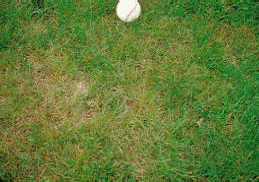
    Small, round to oval, straw-colored spots 2–6 cm in diameter. Many foci can develop and merge.

    On higher-cut turf (parks/residential lawns):
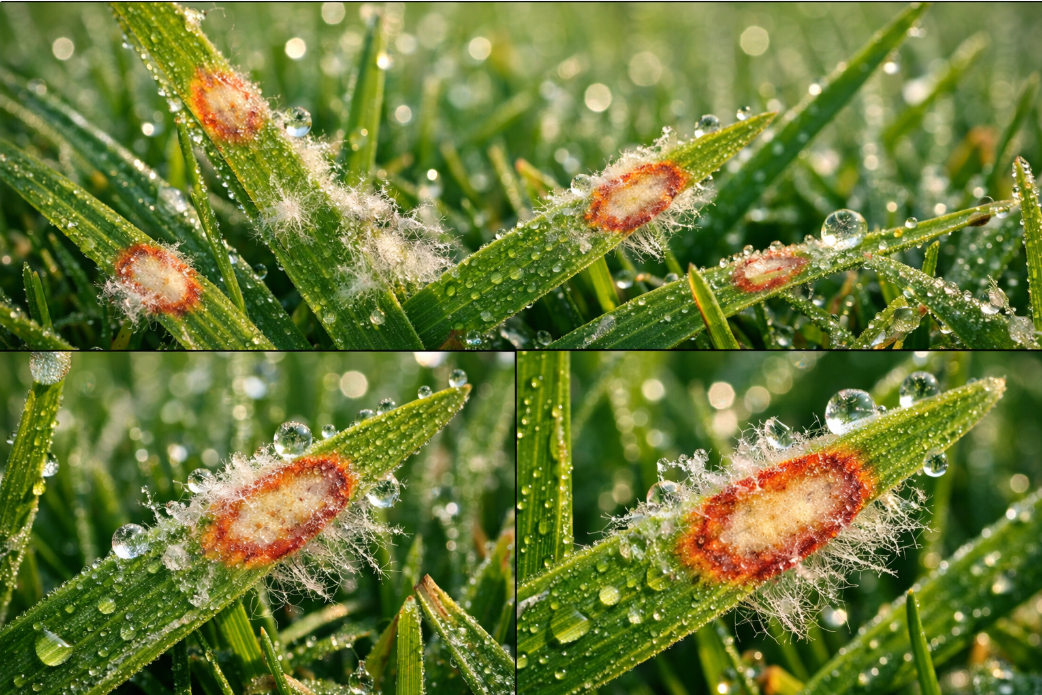
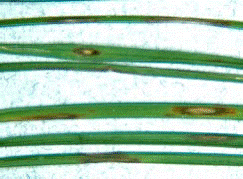
    Elongated leaf lesions are often easier to see: straw-colored centers with reddish-brown margins.

    Early-morning clue:
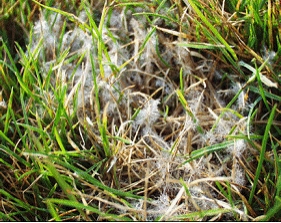
    After long dew periods, you may see cottony/spider-web-like white mycelial strands in affected areas. They disappear quickly with sunlight and air movement.

    Common look-alikes:
    Nutrient deficiency (especially nitrogen), drought stress, mowing injury, and some leaf blights can mimic dollar spot. Use the combination of morning mycelium + typical spot/lesion form + circular spread patterns to improve diagnosis.


    Planning logic and calculation

    1) Fertility target: “Avoid deficiency, avoid excess”

    Dollar spot often intensifies on nitrogen-starved turf. Adequate nitrogen helps the plant recover faster. However, excessive nitrogen can increase susceptibility to other diseases and create soft tissue risk. Annual nitrogen needs in cool-season golf turf vary widely by species, sand content, traffic, and the maintenance program. As a general starting range frequently cited for creeping bentgrass putting greens: 1–2 lb N per 1000 ft² per year (≈ 5–10 g N/m²/year).

    2) Example calculation: From target N to fertilizer amount

    Goal: Apply 0.5 g N/m² in a single application over 300 m² during the growing season.

    • Total actual N needed:
      300 m² × 0.5 g/m² = 150 g N
    • Fertilizer label: assume a product with 20% N (e.g., “20-0-0”)
    • Required fertilizer product:
      150 g ÷ 0.20 = 750 g product

    Application intervals and annual totals should be adjusted based on use intensity, soil/thatch conditions, and turf species. The safest approach is to calibrate the program using soil testing + turf observation + clipping yield tracking.


    Practical action steps

    Confirm diagnosis:
    Early-morning scouting (mycelium present/absent), spot diameter and circular spread, lesion form on leaves, site history (nitrogen program, irrigation timing, mowing height).

    Shorten leaf wetness duration:
    Shift irrigation to pre-dawn/near sunrise; avoid evening/night irrigation; if needed, disperse dew (brush/drag mat) and improve air circulation.

    Correct the nitrogen program:
    If deficiency signs exist, use a small-dose / more-frequent approach to help turf recover—without overloading.

    Mowing and equipment hygiene:
    Sharp blades, correct height, clean equipment after mowing infected areas; manage clippings according to site policy (collect/return) when pressure is high.

    Thatch and compaction management:
    Use appropriately timed aeration (core/solid tine), topdressing, and verticutting to improve the microclimate. Avoid overly aggressive operations that add stress; plan by season and weather.

    Chemical control if needed:
    Use only registered products for turf and the specific site type; follow label rate, compatibility, interval, and rotate modes of action—do not rely on a single group repeatedly.


    Common mistakes and what to do instead

    • Mistake: Extending dew through evening irrigation
      Do instead: Move irrigation to early morning so foliage dries quickly during the day.
    • Mistake: “The turf is weak—stop fertilizing entirely”
      Do instead: Correct nitrogen deficiency in a measured way to speed recovery.
    • Mistake: Ignoring thatch
      Do instead: Reduce thatch/compaction gradually; avoid sudden, high-stress interventions.
    • Mistake: Treating fungicide as the only solution
      Do instead: Combine cultural practices + resistance management + targeted applications.
    • Mistake: Repeating the same mode of action continuously
      Do instead: Use rotation and/or mixed programs; limit solo, repeated use in higher-risk groups.

    Maintenance, monitoring, and control

    Scouting frequency:
    During risk periods (late spring–early summer and fall; long-dew periods), conduct at least two site walks per week.

    Record keeping:
    Irrigation timing, fertilization dates, mowing height, weather (night humidity/dew), and cultural operations.

    Mapping:
    Sketch and track hotspots. Recurrent spots in the same area often indicate fertility/thatch/compaction problems.

    Quality indicators:
    Spot counts and coalescence tendency, turf color, clipping volume, recovery speed.


    Chemical control: principles and resistance management

    Different fungicide mode-of-action groups are used against dollar spot, but availability and registration depend on country and use setting. Some active ingredients have been restricted or removed in many places; for example, chlorothalonil approval was not renewed in the EU.

    Core rules:

    • Use only products registered for turf and the specific use area; follow label and local regulations.
    • Rotate: avoid back-to-back use of the same FRAC (mode-of-action) code; prefer programs with multiple modes of action where appropriate.
    • Resistance risk: Dollar spot resistance is well documented for certain groups, notably MBC fungicides (e.g., thiophanate-methyl); repeated solo use is risky.
    • Pair with cultural control: Shorter leaf wetness + thatch management + adequate nutrition often improves fungicide performance significantly.

    Note: Pesticide selection and application should be done by authorized professionals. Rate, interval, tank mix, and re-entry/closure details must follow the product label and official guidance.


    Practical notes for Türkiye

    Coastal regions (Marmara–Aegean–Mediterranean):
    When night humidity and dew duration increase, dollar spot pressure rises. Edge/vegetation management that improves airflow, early-morning irrigation, and dew dispersal become critical.

    Interior regions:
    Hot days + cool nights can extend wetness if irrigation is heavy or mistimed. Avoid “light and frequent” surface watering; irrigate to a root-appropriate depth at the correct time.

    Saline/hard irrigation water:
    Salt stress and leaf burn can weaken turf and indirectly increase disease. Water analysis and (where drainage allows) leaching plans become important.

    Thatch buildup:
    Frequent irrigation + low mowing height + insufficient aeration can make pressure chronic. The backbone of the cultural program should be thatch/compaction management.


    FAQ

    1. Does dollar spot kill the roots?
      Typically, the main damage is in the leaves; roots and crown are not the direct target. Long-term stress can indirectly reduce rooting.
    2. Why is it more visible in the morning?
      Mycelium is easier to see under dew/high humidity conditions early in the day; it disappears with sun and airflow.
    3. What are the strongest triggers?
      Long leaf-wetness duration (dew/irrigation) plus nitrogen deficiency is the most common high-impact pair.
    4. Does mowing height matter?
      Yes. Very low mowing adds stress and can shift the microclimate in favor of the disease. If site standards allow, raising height can speed recovery.
    5. Will nitrogen alone eliminate it?
      Correcting deficiency often reduces pressure sharply, but it is not a standalone cure. Leaf wetness and thatch management must be addressed too.
    6. Why is repeated use of the same fungicide risky?
      Same mode of action can accelerate resistance selection; rotations are essential.
    7. What should be done with clippings from infected areas?
      When pressure is high, clean equipment and manage clippings per the site plan to avoid moving infected tissue to new areas.
    8. When is it most common?
      In cool-season turf: typically late spring–early summer and fall, especially during long-dew periods.

    Checklist

    • Early-morning scouting for mycelium and spotting
    • Shift irrigation timing to early morning
    • Remove nitrogen deficiency risk (small dose, more frequent)
    • Sharp mower blades and correct mowing height
    • Scheduled aeration + topdressing for thatch/compaction
    • Reduce spread via equipment/footwear cleaning after infected areas
    • Chemical control: registration/label compliance + mode-of-action rotation
    • Keep consistent records (weather–irrigation–fertility–operations)

    References / Further reading

    • University of Delaware Cooperative Extension — Dollar Spot of Turfgrass
    • USGA Green Section Record — General nitrogen ranges for creeping bentgrass greens
    • UC IPM (University of California) — Turfgrass Dollar Spot: cultural control principles
    • Hu et al., 2018 — Thiophanate-methyl (MBC) resistance and genetic basis (PubMed)
    • EU regulations — chlorothalonil non-renewal decisions (EUR-Lex)
  • Rose sawfly (Arge rosae)

    Rose sawfly (Arge rosae)

    Short Summary

    The rose sawfly (Arge rosae) is a pest whose larvae can quickly skeletonize rose leaves and, under heavy infestation, cause clear leaf loss (defoliation). If the population is detected early, hand-picking and regular monitoring are sufficient in most gardens. The most common mistake is assuming the larvae are “caterpillars” and applying controls aimed at the wrong target.

    Video link related to the presentation by Agricultural Engineer Süreyya ALTUNIŞIK: https://www.facebook.com/reel/805043102591192


    Basic definitions and concepts

    Rose sawfly (Arge rosae): A species in the order Hymenoptera, family Argidae. Damage occurs not in the adult stage, but in the larval stage.

    Sawfly larva vs. caterpillar (key diagnostic point)

    Sawfly larvae typically have more abdominal prolegs (in most cases 6–8 pairs). Butterfly/moth caterpillars generally have no more than 5 pairs of prolegs. This distinction matters in practice, because some biological/selective approaches are designed for Lepidoptera caterpillars and may not work on sawfly larvae.

    Appearance of damage

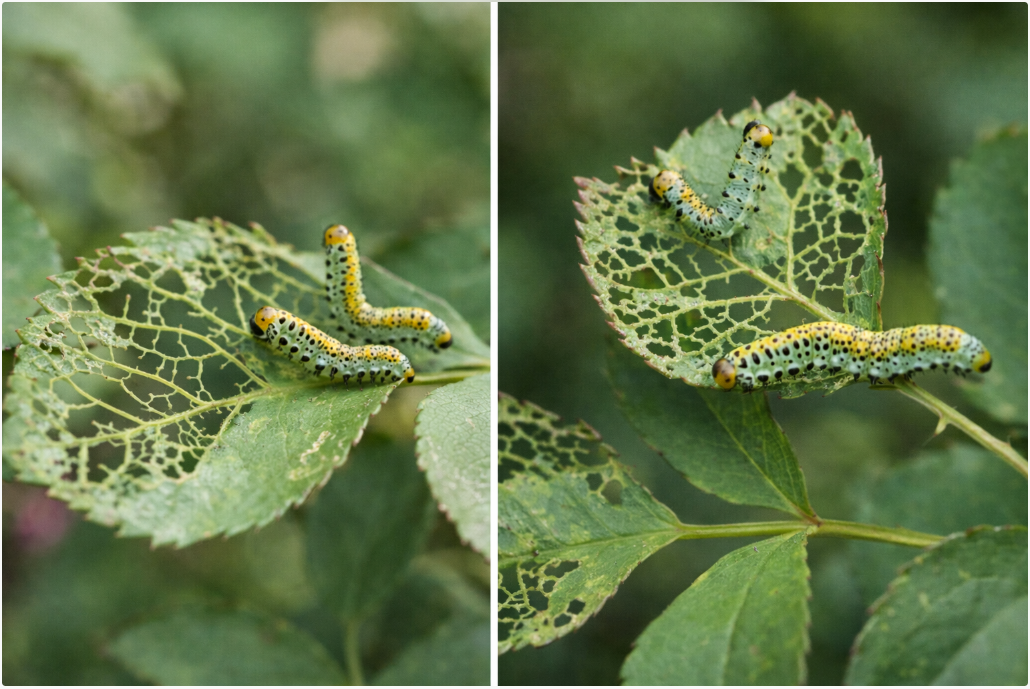
    Because the veins can remain intact for a while as the leaf tissue is eaten, skeletonization is typical. When infestation intensifies, most leaves on affected shoots can be lost and the plant weakens rapidly.


    Purpose and scope of application

    Purpose: Limit leaf loss and shoot weakening; preserve flowering performance; suppress the population before it builds up.
    Scope: Roses in home gardens, parks and residential landscapes, ornamental rose plantings (in general, all roses are at risk).


    Working principle / mechanism

    Life cycle (field-observed sequence)

    Adults lay eggs in leaf tissue at the appropriate time. Larvae hatch and feed on leaves, often clustered on the same leaf and shoot. Mature larvae drop to the soil; the cocoon/pupal stage occurs in the soil. If climatic conditions are favorable, more than one generation may occur within a season.

    Conditions that accelerate damage

    Warm, calm weather; young, succulent leaf tissue; stressed plants (especially irregular watering and nutrient imbalance); and lack of monitoring can allow the population to surge quickly.


    Design and calculation logic

    Monitoring (sampling) plan

    Select at least 10 rose plants that represent the area. On each plant, check 5 shoots from different directions.
    Total checks: 10 × 5 = 50 shoots

    Record 1 — Infestation rate (%)
    (Number of shoots where larvae are observed / total shoots) × 100

    Record 2 — Leaf-loss severity (0–3)
    0: No damage
    1: Light (small “windowing,” limited skeletonization)
    2: Moderate (a clear portion of the leaf surface eaten)
    3: Severe (most leaves on the shoot lost)

    Example calculation
    If larvae are observed on 12 out of 50 shoots:
    Infestation = 12 / 50 × 100 = 24%

    Severity distribution: 6 shoots (1), 4 shoots (2), 2 shoots (3)
    This indicates the population has entered a “moderate–high” band. If severity classes 2–3 are increasing, do not delay mechanical removal and cultural measures; if class 3 becomes dominant, increase the intensity of intervention.


    Application steps

    1) Correct diagnosis

    Larvae often appear with a greenish body, black spots, and yellowish stripes. When disturbed, they commonly curl into an “S”-like posture. The damage pattern is less about neat holes and more about surface scraping and skeletonization.

    2) Mechanical control (first choice)

    In cool hours, larvae are less active; hand-picking and pruning/removing infested leaves/shoots and disposing of them in a sealed bag is effective. Clustered larvae can be knocked off with a water jet; however, if fallen larvae are not managed, they may climb back up.

    3) Cultural measures

    Reduce excessive weeds at the base and thick accumulations of organic debris; this limits sheltered microhabitats during the soil stage. Reduce watering stress; avoid excessive nitrogen feeding that triggers “soft shoot flushes.” Maintain balanced pruning that preserves canopy airflow.

    4) Protecting biological balance

    Avoid unnecessary broad-spectrum treatments, as they can suppress beneficial organisms too. Maintain diversity that supports natural enemies such as birds, spiders, and predatory insects.

    5) Chemical control (if needed)

    Consider it for heavy and recurring infestations when mechanical and cultural measures are insufficient. Use only registered plant protection products according to the label, and, where required, under the guidance/prescription of an authorized agricultural engineer. Two practical factors determine success: correct timing (active feeding period) and adequate coverage (both upper and lower leaf surfaces).


    Common mistakes and correct-practice notes

    • Assuming larvae are caterpillars: Choosing the wrong target makes treatments ineffective. Do not ignore proleg count and the damage pattern.
    • Confusing damage with disease: Skeletonization usually indicates feeding damage, but it can be confused with leaf-spot diseases.
    • Leaving infested material on site: If cut shoots/leaves remain in the area, spread can continue.
    • Relying on a single check: Populations can rebound quickly; re-check within 3–7 days after intervention (depending on weather).

    Maintenance, monitoring, and control

    During risky periods, weekly checks are the baseline approach. If density is observed, shorten the interval to every 3–4 days. Keep records each time using the same sampling method. If severity class 2–3 shoots are decreasing, the method is working; if they increase, revise the intervention level.


    Practical notes for Türkiye conditions

    First appearance may start earlier in coastal zones; in inland regions, start dates shift later due to delayed warming. Where irrigation regimes are poor, the impact of leaf loss on the plant is harsher. In parks and residential landscapes, block plantings with a single species/variety increase risk; monitoring should be more frequent. A thick mulch layer can provide shelter during the larva-to-soil descent and cocoon stage; rather than removing it completely, controlled thinning and base cleanup is a balanced approach.


    FAQ

    1. Are the larvae caterpillars?
      No. They are sawfly larvae; therefore, some caterpillar-targeted solutions may not work.
    2. Leaves are full of holes—fungus?
      Skeletonization and surface feeding suggest insect damage. Searching for larvae on the leaf speeds diagnosis.
    3. What is the fastest solution?
      Early hand-picking and removal of infested shoots is sufficient in most gardens.
    4. Will the plant die?
      One-time moderate damage is not usually fatal for most roses. Repeated severe defoliation, however, weakens the plant and significantly reduces flowering.
    5. When should I control/monitor?
      Increase monitoring during periods of strong shoot growth; shorten the interval as soon as the first larvae are seen.
    6. Do larvae knocked off with water climb back?
      Some can. Fallen larvae must also be managed.
    7. Does pruning help?
      Selective pruning of infested shoots quickly reduces the population, especially in clustered infestations.
    8. Is chemical control mandatory?
      No. Monitoring + mechanical + cultural measures usually provide control. Consider chemicals only for severe and recurring cases.

    Checklist

    • Sawfly larva vs. caterpillar identification done (proleg count, behavior, damage type)
    • Infestation recorded using the 10 roses × 5 shoots sampling method
    • Infested shoots/leaves collected and removed from the area in a sealed manner
    • Base cleanup and excessive weeds/organic debris accumulation managed
    • Watering stress and excessive nitrogen-feeding risk checked
    • Re-check planned within 3–7 days
    • If needed, note: only registered products + label compliance + authorized expert framework

    References / Further Reading

    • EPPO — Rose pests and integrated control notes
    • CABIArge rosae and rose pest datasheets
    • Royal Horticultural Society (RHS) — Roses: sawfly larvae identification and management
    • FAO — Core principles of Integrated Pest Management (IPM)
    • TAGEM / Provincial Directorates of Agriculture and Forestry — Field briefings on ornamental plant pests
    • University Faculty of Agriculture entomology notes — Hymenoptera pests, identification keys