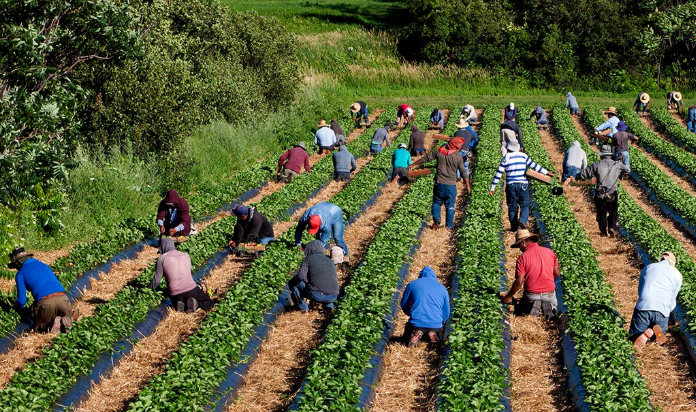
In the 1990s, the rural population of our country was around 40%. By 2009, this share had fallen to about 24%, and today, with the Metropolitan Municipality Law, it has declined to around 12%. It should be expected that this ratio will decrease even further. It is well known that Western countries can feed their populations—and even export agricultural products—with a farmer population of 3% or less.
However, while this ratio changes in Turkey, a very important point is often overlooked: among the population decreasing in the agricultural sector, young people lead the way. The fact that in many settlements there is no one younger than 40 is a phenomenon that must not be ignored in terms of agricultural policy.
Alongside rising input prices, this phenomenon has also contributed to the reality that 4 million hectares of Turkey’s 27 million hectares of agricultural land have become non-cultivable.
Have we ever seriously examined the reasons why young people are disconnecting from the countryside? It is undeniable that, for many, the majority could earn more in rural areas than in cities. In some branches—such as cereal farming—the workload can be far less exhausting than industrial labor. The core issue lies more in the disruption of social life.
In the past, rural youth lived within strong communal structures and collective work traditions; today, they increasingly consist of individuals who suffer loneliness on the seat of a tractor. Under the influence of expanding media environments, the situation becomes even more severe, and rural youth experience major difficulties in finding a spouse. It cannot be denied that such social developments pose a threat to the future of our agriculture.
Agricultural intellectuals, politicians, and decision-makers who understand the pulse of rural life must recognize the issue, develop ideas, express views, build awareness, and support the planning of measures and incentives for the future.
In recent years, efforts to highlight and support family/small enterprises may be appropriate only for certain sectors of agriculture, such as vegetable production. The agricultural enterprises of tomorrow, in order to be competitive, must be of economically optimal size and must be managed professionally.
To bring back into agriculture the lands that have remained outside farming until now—and those that will be abandoned in the future—the transformation into medium and large enterprises is inevitable. Let us take a look at some options that may come to the forefront:
- Enterprises that expand organically in place;
- Commercial private investments;
- Local investments led by hometown/solidarity associations for social purposes;
- New model investments based on public–private–citizen cooperation.
These issues have been examined in various publications.[1] For example, the last topic is discussed on the ORAN (Central Anatolia Development Agency) portal under the title “Local Development Model in Anatolia: Yozgat Kabalı Village Fruit Growing Project.”[2] Consider how it is presented:
“The project is being implemented in two stages on a total area of 10,920 decares (1,092 hectares) in Kabalı village, Kadışehri district, Yozgat. Although Stage 2 has not yet begun, in a 4,991-decare (499.1-hectare) portion of Stage 1 (formed by consolidating 236 farmers’ lands) and for export-oriented fruit production, 50,000 cherry saplings and 350,000 semi-dwarf and dwarf apple saplings were planted, irrigated by drip irrigation.
For the first time in our country, the project began as farmers came together and transformed their lands into orchards. It is expected to contribute positively not only to the regional economy but also to social development goals. It is also anticipated to trigger many related and sub-industries such as cold storage facilities, fruit juice and jam factories, and the transportation sector.
The project is of great importance due to its social and economic returns, its demonstration role for the area (Deveci Basin), and its potential to serve as a model. Before the project, Kabalı village grew low-return products using traditional methods; farmers could not keep up with innovations due to lack of investment capacity; and because income could not meet needs, intense migration to big cities occurred. With the project, farmers’ income levels increased, employment was created for young people, modern production techniques were initiated, and the village began to receive migration.”
(The entire project area consists of 830 parcels owned by 620 people.)
At a time when our national agriculture is being reshaped, we must naturally develop new strategies and quickly begin agricultural labor planning suitable for today’s conditions.
Nazimi Açıkgöz
References
- [1] “Tarımımız için yeni sosyo-ekonomik model arayışları” (Radikal Blog)
- [2] ORAN portalı — “Devecipınar Havzası” ziyareti / proje notları
This article was published in the “Prof. Dr. Nazimi AÇIKGÖZ” category.
Leave a Reply